Wednesday, 21 December 2011

Portraying the Age of Reason


The Enlightenment Sage

TO be found in the Fitzwilliam Museum, Cambridge, Gerrit Dou’s powerfully expressive The Schoolmaster (1645) captures beautifully the seasoned erudition of its subject and the quiet compassion of a man imparting knowledge to his students. The schoolmaster appears both stern, as if momentarily frustrated by our gaze, yet is attentively in control of those for whom he is a mentor. The painting embodies the ethos of the Enlightenment era it prefaced – in the background, the Grecian column, an image of established thought; in the foreground, those who have inherited that legacy, now scrutinising doctrine as young scholars in a rich age of New Learning. Dou’s canvas lyrically reflects and contextualises the progressive intellectual agenda of the day, synthesising the demeanour of a figure who innately commands our respect and the youthful speculations of those in his charge. The schoolmaster, in gesturing towards a text being studied by a pupil, instructs the observer as much as the child, compelling our own pursuit of learning. Character and audience are apprenticed to a cautiously assertive proponent of received wisdom.

The trappings of humanism - the hourglass, and the manuscripts protruding from the desk - combine with an intellectualism that is as much the atmosphere as the theme of a deceptively simple evocation of the infinite pleasure and value of human enquiry.

A man of experience fuels the burgeoning curiosity of the young to mould a scene that is by turns touching and infinitely suggestive.

Monday, 19 December 2011

Voyaging into the Absurd

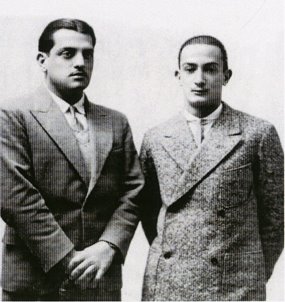
Three reflections on Buñuel and Dali: Violence, Art and Materialism in Un Chien Andalou


"Confusion now hath made his masterpiece" - Macduff (2.3.63)

"I have striven not to laugh at human actions, not to weep at them, nor to hate them, but to understand them." - Spinoza, Tractatus Theologico-Politicus

ALTHOUGH it did not provoke the anticipated riot at its 1928 premiere at Studio 28, on Montmartre, Paris, the fact that Un Chien Andalou has effortlessly courted controversy ever since will have more than compensated for any initial disappointment felt by directors Luis Buñuel and Salvador Dali. That it effectively inaugurated the Surrealist genre in cinema is broadly accepted, after all, and the central objective of the production - to baffle and frustrate its audience through the absence of any coherent, defined narrative - was magnificently, if chillingly, accomplished. Inconsistencies of mood and circumstance - the opening caption "Il était une fois" ("Once Upon a Time") suggesting a fairy tale and due placidity of action, only to be followed by a moment of shocking violence and the title "Huit ans après" ("Eight years later"), with no explanation of the drama or the intervening years - contribute to a brutish demotion of linearity, the negation of any viable discourse. So dense is the allegory that even the film's most "associated" images - the slicing of an eyeball that subsequently bears no evidence of injury - are, as such, content to subvert even our most basic assumptions concerning cause and effect, subordinating biological and moral laws to a ferociously original and anarchic creativity.


The advance of our responses to the film, from an initial unease to a strained toleration of its macabre inventiveness, is effected by its paradoxes of ecstasy and pain, and the oddly benign, tantalising sense of mystery otherwise gratuitous representations engender. The film, in its perpetuation of compelling sexual and metaphysical puzzles that inexplicably excite curiosity more than revulsion, duly exploits our innate attraction to tragedy and to the fantastical. In doing so, it exposes the hypocritical sense of freedom we feel as spectators - its oddities perversely contribute to an intellectual rather than moral debate, one we openly conduct precisely because it stems from a desire to understand rather than an inclination to denounce. It is an enquiry that, as such, enables us to sidestep the suffering of those characters whose experiences pose no threat to us, and thus to privilege scrutiny over compassion. Whilst such an argument falsely supposes an entirely neutral view on our part of what befalls Andalou's protagonists, it would be nonetheless remarkable that such an entertainment could have commanded so much critical attention had we never overcome our aesthetic and ethical inhibitions in favour of a sober, "philosophical" consideration.

It is the objective of what follows to offer perspectives on three key scenes in this most notorious of early experimental films - focusing on violence, art and materialism.


The object of the horror - but a victim?


WE see the face of a young female (Simone Mareuil) in close-up. The figure behind her (Buñuel) makes to slit her left eye with a razor. She half smiles, as if in stoical acceptance of the experience, making no effort to avert her suffering or to subdue her rival. She gazes at us - she cannot see him - she is emotionally and physically blind to what transpires. The woman is alarmingly indifferent to her "fate" - her coldly unemotional "response" is as unsettling as what befalls her. Her strikingly autonomous reaction is inexplicable, successively recruiting and declining our inevitable sympathy. Her neutrality stresses the curiously structured quality of the scene - the playing-out of the moment seems methodical, an enactment of demonstrative rather than spontaneous aggression. Buñuel nefariously excites our attention rather than otherwise innate revulsion. The female purportedly sanctions her violation, frustrating our inclination to condemn the savagery. Her subservience lends a horrific rationality to the action, Buñuel playfully fusing the acquiescent and the crude.

The razor scene, although according with Buñuel and Dali's creative mandate for the film, in purporting to represent a dream, is nonetheless openly sadistic and grossly unambiguous in its depiction. The woman's complicity intimates a key aspect of Kantian Moral Theory, that of Autonomy. For Kant, all we can empirically know is confined to space and time, the Sensible realm he calls the 'Phenomenal'. "True reality", though, lies beyond our apprehension, in the "Noumenal", or "Intelligible", world. Our Will is autonomous, through revealing to itself capacities for self-legislation, motivation and constraint. The Will is the noumenal "proper self" (Groundwork of the Metaphysics of Morals [1785] 4:461). Kant holds us to be determined through membership of the Phenomenal, free through that of the Noumenal. The Noumenal functions independently of Nature, yet grounds its laws independent of our "sensory intuition". The razor scene constitutes a dual representation - a stark metaphysics tempered by the woman's vividly-conveyed unconscious, merging the clarity of the tacit and an acutely-realised Gothic nothingness. It is the dream, the Dalian noumenal, that mitigates the woman's submissiveness, but through an appalling irony wherein hers is an ethereal rather than perceived trauma. Her Will is a terrible actualisation of Self that accepts rather than combats her plight.


Calm brutality - and the horror of the smiling complicity.

This fragment of Surrealist horror presents a figure but no character, a true Self with a redundant Agency, her volition stripped of liberty. She knows nothing of her pain, occasioned by an invisible nemesis - her fortune and pathos are by turns the greatest. Whatever the benignity of the Kantian noumenal, or the virtue of the truth revealed therein, the woman here "endures" its most depraved manifestation, an intellectual system adapted for a uniquely coarse artistic end. Such a manipulation confronts Kant with a sui generis aesthetics - experience that is not undergone in the Phenomenal, and one that the Noumenal does not accordingly rationalise.

The opening mercilessly pastiches objectivity, conveying graphically an act of bodily corruption, only to proceed immediately with new but unconnected action, offering no moral perspective on the horror just witnessed. It is a ghoulish, adamant declaration without annotation. The imagery is loaded, busy, but ideologically empty, purporting to show much but content to say nothing. The woman's "victimisation" is random but calm and explicit, momentary but neither chaotic nor frenzied. It is a beginning, but to the episodic and disparate, it can be no prologue.

Art imitating life? A conformist solitude


The woman is seated in the centre of the room, reading. The palatial, opulent interior attests to precision rather than spontaneity - there is no aesthetic approximation in her surroundings, instead an exacting decadence reflecting artistic richness but emotional coldness. Immediately conspicuous, then, is the Bourgeois immersion in the antiquated, and the perennial irony that the "freedom" of affluence can, as here, entail subjugation to inherited tastes and prescribed values. The setting ratifies her status, to be sure, but she is ensconced in a normative elegance rather than at liberty to characterise the interior with alternative or personalised motifs. Buñuel ridicules conformity to a hierarchically-stipulated aesthetic, one sympathetic to the approval of a collective rather than to individual preferences.


The scene momentarily cuts to a man (Pierre Batcheff) riding along the street. Looking startled, the woman throws down the book, and goes to the window, seeing that he has fallen from his bicycle. Her book falls open at Vermeer's The Lacemaker. In discarding The Lacemaker, the woman is physically and ideologically unbound from an ordained intellectualism, humouring the precious Bourgeois aversion to the formulaic, contemporary or mainstream, that imperialistic social doctrine with which she has hitherto abided. Turning her attention from the labours of Vermeer's subject, the female overcomes the popular image of woman as creator and provider, now addressing her own desires and objectives, exercising impulses which cannot be governed or defined solely by her background or circumstances.

Whatever "independence", though, in casting aside The Lacemaker, the woman now enjoys, Buñuel persistently undermined social pretension throughout his career, perhaps most abjectly in Le charme discret de la bourgeoisie (The Discreet Charm of the Bourgeoisie) (1972), in which six characters find their dinner party interrupted by a succession of ever more surreal events. In Andalou, and in this scene, everything in the room seems generic, a rigid application of aesthetic values that cite and inspire societal acceptability. For Buñuel, the Bourgeois conception of 'beauty', and their implementation of that standard, is not an end in itself but a self-conscious reflection of social stratification, an adherence to class expectations motivated towards attainment of peer approval and potential elevation. Yet it is this, their illusory, peculiarly immature notion that exhibitions of material stability can be the measure of the individual, of their past accomplishments and of what they have to offer, that operates at the expense of the emotional, of progressive interaction. In Buñuel's philosophy, the Bourgeois outlook represents a clear yet superficial manifesto for existence, its principles, while apparently distinct and structured, little more than archaic criteria which have themselves moulded a dependence on a heavily referential framework. The Bourgeois perspective, in embracing the secondary, the manufactured, undermines the natural and the instinctual, trite salutations to an imperialistic sensibility.  

Idolising the grotesque - a capitalist lament?


The film's attention turns from the young woman to a hermaphrodite (Fano Messan). This new character is standing in the street, a severed hand at "his" feet. "He" is surrounded by a crowd, variously compelled and bemused by what they see. A cynical Buñuel has already stressed the Bourgeois fetishism of the acquisitive, the disembodied hand becoming an object of pity. Never again will it take and keep. The crowd, transfixed by the scene, mourn for that which will no longer covet and gain. They spectate intently upon this grim curio of bodily inertia, the hermaphrodite prodding the hand with a cane as if willing it to action. A police officer holds back the crowd, then picks up the hand, places it into a box, and passes it to the "man". The mysterious figure is unresponsive, barely conscious of "his" surroundings. The crowd reluctantly disperses, leaving "him" standing alone, holding the box close to "his" chest.

The hand is to be preserved as a relic of a sacred yet disappointed materialism. Once, it fostered an imperative consumerism, the necessary collation of cultural products key to inclusion within the elite. Now, it can only be a redundant emblem of a once aspirant capitalism, a flesh icon of mock happiness and enchanted but tragic fantasies.


Moments later, the hermaphrodite, trance-like, is run down by an automobile. The "man" is "himself" a victim of the Bourgeois enslavement to commodities, the tragic prevalence of manufactured over intrinsic human value.

Saturday, 17 December 2011

New album reflects on time and the emotions


Haunting beauty in new work by esteemed Irish artist

CELEBRATED Irish artist Mary Black's Stories from the Steeples is her first studio recording in six years, and a revelation. An ethereal synthesis of the melancholic and upbeat, its principal themes are time and the emotions. The fourth track, 'Faith in Fate', evokes love as a serious commitment, and the fear of imminent loss, rather than romanticizing the past (“Put the past away/Save it for a sunny day/Right now it just seems so obscene to imagine you without me”). 'The Night Is On Our Side' eschews threat as a typical connotation of darkness (“The night is on our side/To wipe the tears from our eyes”), evoking sentiment rather than the gothic. Perhaps the standout piece, 'The Night Was Dark and Deep', describes repressed feelings on a family car journey, with hypnotic chords illustrating the virtue of the repetitive. A remarkable album, meditating perceptively on realism and aspiration.

Twilight Sad album finds affinity with Joy Division


Depth and Originality from Scottish Band

AN indie rock band from Kilsyth, Scotland, The Twilight Sad give us No One Can Ever Know, evocatively fusing the surreal and the melancholic. Their third studio album, it was recorded in London, and is being released by Fat Cat Records on February 6th, 2012.

The experimentalism of the album is striking throughout, with the opening chords of track four, 'Don't Move', recalling those of Joy Division's 'Love Will Tear Us Apart'. Perhaps the most memorable piece, 'Sick', is already available as a 7" vinyl, and exudes a mellow, almost hypnotic quality. Band vocalist James Graham, as narrator, playfully arbitrates time and freedom ("I'll buy you the night/I'll buy you the time/We can do anything you want"). The lyrics are as philosophical as they are artistic, the notional uniting palpably with the creative.

Production Assistant Andrew Weatherall has said the album's aim is to achieve "...a colder, slightly militant feel", and parallels are to be observed between Radiohead's The Bends and OK Computer, the Manic Street Preachers' The Holy Bible, and this new compilation, with a moody originality and meditative aesthetic.


Tuesday, 15 November 2011

If the Spirit Moves You

Published in the Dereham & Fakenham Times, November 17th 2011

A tribute to atmospheric Walsingham

BRITAIN's landscapes have always and effortlessly inspired adulation - Wordsworth's hymns to the Lakes, Ruskin's love of Durham - and it is no surprise that Norfolk excites just as much veneration. Ramsay Gibb, moved by his experiences en route to Walsingham, is the latest artist to express what our county means to him.

Ramsay, from Clitheroe, Lancashire, made a trip to Lindisfarne, the tidal island off the North-East coast of England, in 2008. There, he immediately recognised the significance of the nation's pilgrimage routes, the fact that many remain active, and how they could feed his passion for art. So it was that Ramsay then made his way to Norfolk, with his extraordinary images displayed at London's Francis Kyle Gallery (October 26th-November 24th). The exhibition, A First Avowed Intent: On Pilgrim Roads from Iona to St David's, features both landscapes and seascapes, taking in everywhere and everything from Queensferry, Scotland, to exquisite sunsets in Walsingham and Suffolk. The spiritual as well as aesthetic power of these locations is everywhere manifest in his paintings, and Ramsay's perspectives on Walsingham attest to the rugged beauty of its natural scene, not purely its historical meaning for centuries of devout visitors.

As Ramsay acknowledges, though, Walsingham's past religious legacy is second only to that of Canterbury's, and the exhibition's display in the City's Maddox Street space can only offer Walsingham the national as well as local attention it so richly deserves. Walsingham's renown as a place of pilgrimage is something upon which Ramsay draws heavily in his work, but he also uses walking as a broader metaphor for spiritual uplift. Recalling the words of nineteenth-century Danish philosopher Soren Kierkegaard, "...I walk myself into my best thoughts...", Ramsay holds those sentiments to really encapsulate the effect that places like Walsingham have always had: "That's very much", he says, "....what pilgrimage is about for a lot of people". Certainly, his renderings of Walsingham inspire positive thoughts, with sun-kissed trees mirroring Nature's capacity to engage the emotions, invigorating possibility rather than limitation.


Ramsay's impressions of Walsingham and of the Brecklands are remarkable, and the London exhibition provides a unique opportunity to see a familiar part of our county at a time when it is being introduced to a much wider audience.

His website can be visited at http://www.ramsaygibb.co.uk/ and that of the Francis Kyle Gallery at http://www.franciskylegallery.com/ . Don't miss out on this chance to enjoy a highly original artist's tribute to one of Norfolk's most celebrated areas.


Friday, 28 October 2011

Gentle Regrets

A Conflict of Duty and Feeling

WITH three superlative E.M. Forster adaptations already to their credit, the Producer-Director-Screenwriter team of Ismail Merchant, James Ivory and Ruth Prawer Jhabvala turned their attention, in 1993, to Japanese novelist Kazuo Ishiguro, and his Booker Prize-winning The Remains of the Day (1989). If A Room with a View, Maurice and Howards End had been polished comedies of manners, then their new project would be a drama of protocol, and the nuanced cocktail of egotism and cautious diplomacy politics naturally entails. Recruiting Howards End alumni Anthony Hopkins and Emma Thompson, the film charts Darlington Hall’s hosting of a summit during the inter-war years, and the coinciding arrival of a new housekeeper, Miss Kenton (Thompson). Lord Darlington (James Fox), keen to mend relations with Germany following the reparations demanded of her at Versailles in 1919, will lead the delegation, with Stevens the butler (Hopkins) ensuring that justice is realised in flawlessly opulent surroundings.

Foregrounding the imminent descent of Europe’s political elite, Stevens urges his staff to “let them know they are in England”, his assured rhetoric a curiously infantile advocacy of patriotism that subordinates the democratic process to a superficial theatre of nationhood.


Woven into preparations for the conference, and its bid to stabilise a tense political climate burgeoning in Europe, is the film’s second and similarly complex story – the sometimes tepid professional association of butler and housekeeper, but one that rarely betrays Stevens’ evolving regard for Miss Kenton, and perhaps his love. Indeed, though their early exchanges are slightly acrimonious – centring, variously, on an ill-positioned oriental treasure, and her inexperience compared to that of Stevens’ butler father (Peter Vaughan) – evident nonetheless is a mutual respect, even affection, between the two. At the heart of the narrative, then, is the brilliantly understated test of how far, if at all, Stevens will voice his feelings for Miss Kenton. His is a perpetual conflict of duty and feeling, and whether his perfected austerity will admit desire into a cloistered world of professionalism and restraint.  


Indeed, it is not solely love between them that Stevens’ abject loyalty stifles, but a political meeting of minds. When two maids, Elsa (Emma Lewis) and Irma (Joanna Joseph), look set to be dismissed on the ground of their Semitism, Stevens seems almost unmoved, while Miss Kenton threatens to leave herself, should they be obliged to depart. Whereas she is horrified that race can be any criterion for their exit from the house, Stevens insists “It is out of our hands. His Lordship has looked fully into issues surrounding the nature of Jewry”. Palpable throughout the film is the irony that Stevens’ consummate professionalism itself impairs his moral judgement, even the fascism in which he is unwittingly complicit a footnote to his unquestioning service to Darlington. During the pivotal conference dinner scene, a glittering ensemble of etiquette and sycophantism, American Congressman Lewis (Christopher Reeve) bemoans the “amateurism” of those assembled, noting how their well-intentioned words cannot veil how little they understand world affairs. Stevens’ taut expression, upon hearing Lewis’ polemic, conveys, through its peculiar naïveté, the true extent of his loyalty to Darlington – as if his employer’s rank political inexperience can be stressed above Darlington’s own but archaic retorts about “honour” and “goodness”.  
After interviewing another candidate for service, Lizzy (Lena Headey), Stevens declares “She’s not suitable”, but is assured by Miss Kenton that “She’ll do well”. Pressed by her on the matter, the butler dismissively claims to have “...placed [my] thoughts elsewhere, while you chatter away”, before holding Miss Kenton to be “always right”.


His purported immunity to her criticisms, only to be followed by a proclamation of her faultless intuitions, lends humour to their casual interactions, but pathos to moments when expressions of genuine emotion are impeded by his social unease. “Miss Kenton, you mean a great deal to this house. You’re extremely important to this house, Miss Kenton”, he tells her. “Am I?”, she replies, with surprise and hope. “Yes”, he says, as if frustrated there can be any doubt on the question. How much he has acknowledged her professional gravitas, how little the implicit depth of his feeling. Later, in Mr Stevens’ parlour, Miss Kenton probes him on what he is reading, gradually prizing the volume from his hand. He gazes at her almost tenderly, with a silence through which so much is said. In the film’s devastating account of their staid reciprocity, the parlour scene is perhaps the defining moment – whether Mr Stevens will allow intimacy to temper rationality, if his Kantian demeanour can entertain possibility amid almost ritualistic sensibilities.
Compelling and moving, Remains is a superbly executed drama that meditates evocatively on whether it is integrity or sacrifice which fosters potential, and just how far autonomy can go in ensuring happiness.

Friday, 21 October 2011

After Amis: September 11th

"....that was the defining moment"

AT 8.49 on the morning of September 11th, 2001, a newsflash interrupted a commercial break on America’s CNN channel. It conveyed shocking images of smoke billowing from one of the towers of New York’s World Trade Centre. Initial reports were abundant with speculation but scant in detail – had this been an accident? What kind of craft had struck the Tower? How many had lost their lives in this monolithic hub of fiscal activity? At 9.03, the unthinkable answered those questions in a single and appalling motif of organised devastation, with the north tower likewise impacted by a passenger plane, a moment that compelled Martin Amis, in The Guardian, to observe -

"It was the advent of the second plane, sharking in low over the Statue of Liberty; that was the defining moment." *

mirroring, it must be conceded, the benign voyeurism that, though of something irrefutably wicked, momentarily prevails in the mind of the viewer, our instinctive outrage tacitly supplanted by our innate and tangible attraction to drama.

Barely had the dust of those attacks settled than the jargon of the atrocity, “9/11”, “Al-Qaeda” and “Radicalism”, became firmly embedded in the empirical glossary of the Western consciousness. Everything seemed either directly associated with the event, or a mere footnote to its significance – we were all drafted into the climate of this savage, spontaneous modernity, the inhabitants of the “post-9/11 world”, an act of singular barbarism that had purportedly transferred the “threat” from the hypothetical to the realm of a malevolent normativity, affronts to liberty uniformly met with disbelief but couched deeply in a reluctantly accepted “state of fanatical play”. Each new instance of terror abjectly perverts our morality, to be sure, and yet expressions of revulsion seem accompanied, paradoxically, by a de-sensitization through which, if condemnation is primary, they are individual statements of shock located in a broader resignation to the “culture of the maniacal” rather than the “phenomena of the extreme”.


If, at the visual heart of arguably the most photographed event in human history, lay a litany of tragic images, an appalling confirmation of death on a mass scale, then, at the ideological core of the savagery resided, curiously, a twisted conception of Being. Sometime after the attacks, a four-page transcript was found among the belongings of pilot Mohamed Atta. If the pages were littered with intimations of death, then such “philosophies” were inextricably bound up with a malevolently-attained reward of immortality. The closing passage read –

"When the hour of reality approaches, the zero hour….wholeheartedly welcome death….
end your life while praying, seconds before the target….

Afterwards, we will all meet in the highest heaven…. ." **

Death was purely an interim necessity en route to a cruelly-won salvation. Even the moment of impact, the ultimate experiential horror, is confined within a grim metaphysical prospect – the “zero hour” saw the conspirators, in the final moment of their lives, acting independently of temporal and moral parameters, their thoughts centred not on fate but a belief in the “life to come”. The ‘….hour of reality….’ saw the terrorists ascribe greater actuality to an imminent “existential metaphysics” than to the world from which, through a terrible liaison of brute determinism and abhorrent iconography, they would depart for the ‘….highest heaven….’, an elite First Principle reserved for those who

"….strike like champions who do not want to go back to this world"

For the terrorists that morning, their objective was not the glorification of death, but the elevation borne of that sacrifice.

It is the sublime or the morbid within human nature which dictates whether that union, Being, is realised for the most altruistic or corrosive of anthropocentric ends. 'Being' is the Rosetta Stone of what divides experience and negation. That most seamless species of Being, the insatiable rivalry of horror and goodness, reveals the exhortions or superlatives on that seasoned tablet to be the most grotesque polemic or the most patient, benign etching.


* 'Fear and Loathing', The Guardian, September 18th, 2001
** 'A Nation Challenged: Notes found after the Hijackings' (Editorial, New York Times, September 29th, 2001)